
Searching for a Warrant in Chester County
There is no one public Chester County warrant database. Start with the court printed on the ticket, summons, or case papers. The South Carolina Public Index can point to a court case, the state traffic tool can locate some ticket records, and the issuing clerk can explain how to confirm a status. Keep your search private. A case number and the correct municipality often route a request better than a broad name search.
For General Sessions, call the Clerk of Court. For county summary criminal or traffic matters, use Chester County Magistrate Court. A city ordinance or traffic matter belongs with the municipality printed on the citation. If the question is about custody or bond, the Sheriff or Detention Center may route it; that office does not publish a public active-warrant search.
- Read the court and municipality on the paper notice before opening a search tool.
- Use the state Public Index for a case lead, then write down the selected court and exact result wording.
- For traffic, search the official ticket tool by citation, license and state, or first name, last name, and birth date.
- Call the issuing clerk if a result is missing or unclear. Ask the Sheriff or Detention Center only about custody or bond routing.
- Use a written FOIA request for a defined policy, count, or document, and ask a lawyer about personal legal steps.
Chester County Warrant Sources Differ
The state court search entry leads to case and roster tools. The Sheriff’s official site exposes contact, detention, and bond links, but the September 20, 2026 review did not locate a warrant-search form or active list. Its linked inmate vendor timed out during research, so it should be described only as a custody search.
The SLED CATCH service searches criminal-history information and expressly excludes wanted-person data. A CATCH result cannot clear a warrant. The traffic system is for citation records, not a complete warrant index. Each tool has a narrower job than its name may suggest.
The image shows the CATCH form at a high level; it contains no person’s result.
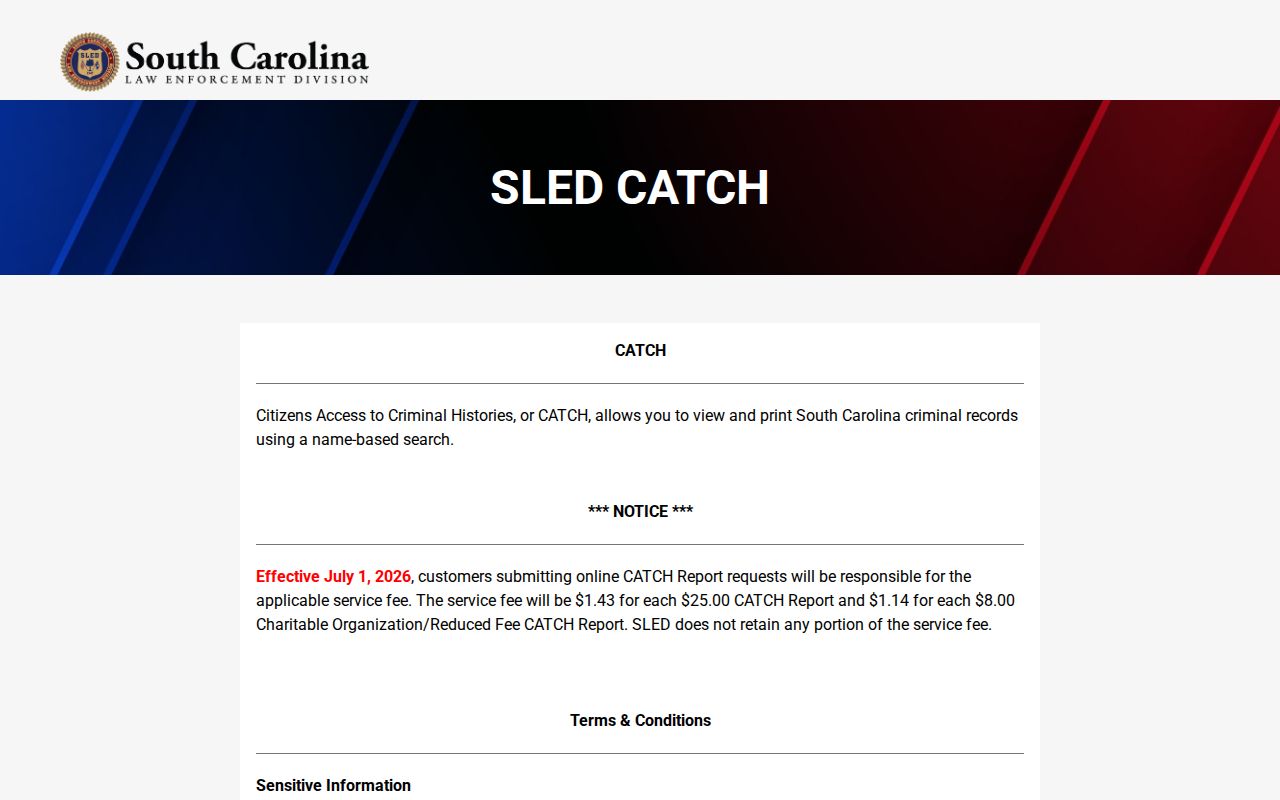
Use the service only for the criminal-history question it covers, then confirm warrant status with the issuing court.
Warrant Search Fields Explained
Chester’s public tools do not share one form. The state traffic search shows three ways to locate a ticket, while CATCH has a separate criminal-history form. The Public Index is an official court-record entry point, but detailed Chester search fields were not visible in the research review. Use only the inputs the live official screen asks for.
| Field Label | Type | Required | Notes |
|---|---|---|---|
| Citation number | Text | Required for citation mode | Use the number printed on the ticket. |
| Driver-license number and state | Text plus selection | Both required for license mode | Enter privately; do not post the number in public. |
| First name, last name, date of birth | Text and date | All required for name mode | Use the official Traffic Ticket Search only. |
| CATCH name fields | Text and date | Starts-with search fields | Criminal-history service; wanted-person information is excluded. |
| County or municipality | Selection | When the tool requests it | Choose the court jurisdiction shown on the citation. |
Chester County Warrant Search Delays
A traffic ticket can take three to five business days to enter the state payment system. The South Carolina payment page says to select the county or municipality, enter the case number without spaces, then use the last name to locate the case. If the system says no record was found, it directs the user back to the county or municipality that issued the ticket.
A delayed ticket is not proof that a bench warrant exists or does not exist. Call the court printed on the citation and ask whether it requires an appearance, payment, or another step. Keep any receipt and ask how the court confirms that its record changed.
What a Warrant Search Shows
South Carolina’s blank official forms display a general record schema, including court, case or docket reference, party, charge or reason, issue date, judicial officer, return, and bond. The live Public Index may show a docket lead rather than every warrant field. A form’s fields do not guarantee the public portal exposes them or that a status is current.
| Case reference | Court-assigned case number is a routing key; this sample has no person identifier. |
|---|---|
| Charge or reason | The form may note an offense, probable-cause basis, or failure-to-appear reason. |
| Issuing court | Use the exact court name to find the clerk who controls the record. |
| Bond | A release term does not mean a fine was paid or a case was dismissed. |
| Service and return | May show process events; ask the issuing court whether the status is current. |
Chester County Warrant Status Words
Read each status as an event or label from the system that supplied it. Do not treat a historical docket line as a current service confirmation. If the result does not explain its status, ask the court clerk which event controls and whether a later return or order is on file.
- Pending
- A docket or aggregate reporting state, not a live person-level conclusion.
- Served
- Process was executed or returned in the record; it is not a conviction.
- Recalled or quashed
- The court took an action that should be confirmed by that court.
- Sealed
- Access is restricted, so a public screen may omit the record.
Family Court Warrants Differ
Family Court is a separate record route for support, contempt, domestic, and juvenile-related matters. The Clerk of Court’s General Sessions records are not a substitute for that docket. Chester County Family Court lists its office at 126 Wylie Street and (803) 377-7156. If paperwork names Family Court, contact that division and ask about its access rules rather than searching only a criminal case index.
Juvenile records may be protected by separate confidentiality law, and a public query may not reveal whether a related matter exists. Ask the custodian what information can be confirmed. A family-support obligation, a criminal charge, and a bench warrant are distinct legal records even when they involve the same person.
Contact Chester County Family CourtWhere to Check Warrants in Chester County
Chester County’s records are divided by court. The Clerk of Court at 140 Main Street handles General Sessions records and bond-issuance records. Magistrate Court at the Law Enforcement Center handles county summary criminal and traffic matters. Chester, Fort Lawn, and Great Falls have municipal entries in the state directory. Family Court is a separate route for support or contempt records.
The Sheriff site lists law-enforcement and detention contacts but no public active-warrant roster was located. The state offers no single public statewide warrant database. The image below is the official court-record search entry point, not a complete warrant index.
Open the Judicial Branch court search entry to select the county and reach its official case tools.
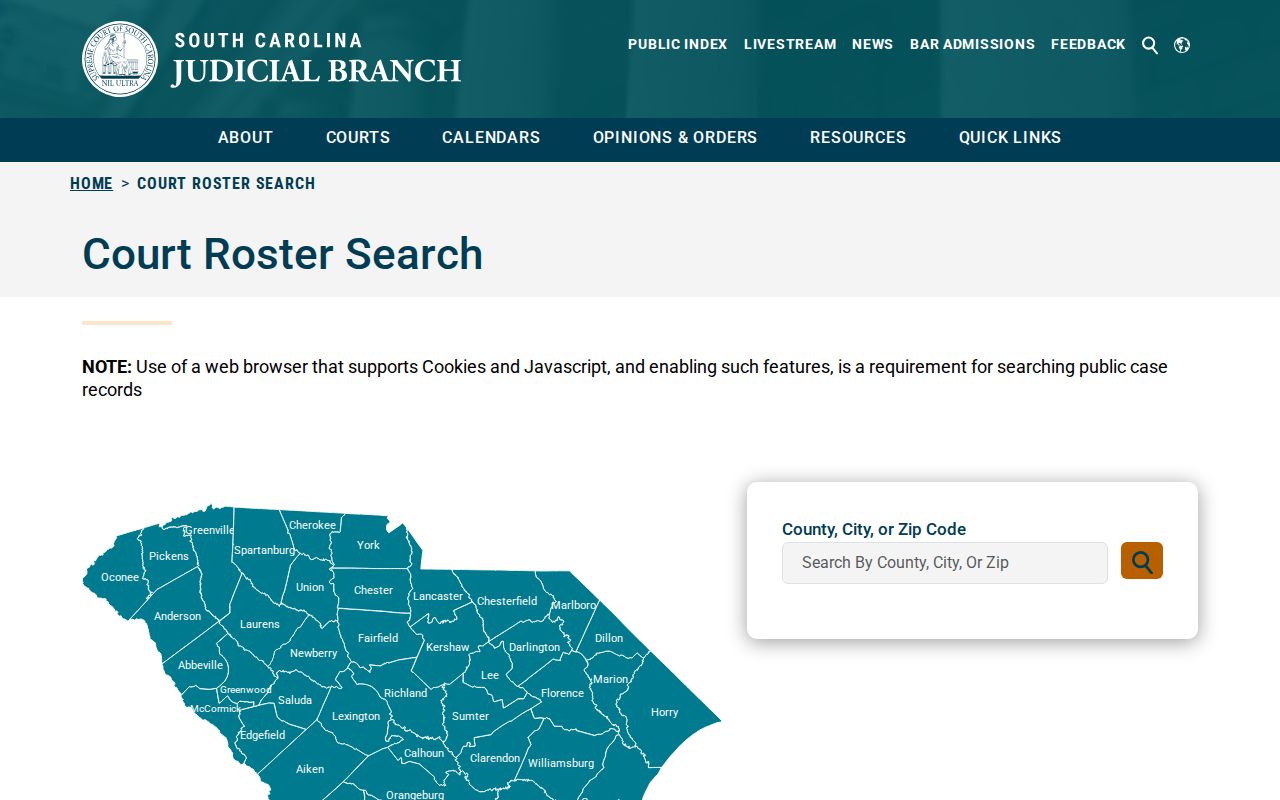
For the right local answer, compare the selected court with the caption printed on the citation or notice.
Chester County Warrant FOIA Requests
The county FOIA form is a written route for a defined document, policy, or aggregate count, not an instant name search. It asks the requester to describe the record and states a $15 minimum administrative fee plus actual costs. A useful request names the office, the record type, and a date range. A written response may explain an exemption or refer the request to another custodian.
For example, ask which office keeps a bench-warrant procedure or whether a public access policy exists. Do not request or republish a private-person roster. The official county request form gives the submission details; the statute controls fees, timing, and exemptions.
Restricted Warrants and Access Rules
Public-record rights have limits. A court may restrict a sealed record, juvenile information is protected under Title 63, and law-enforcement material may be withheld when disclosure would interfere with an investigation. A blank search result can reflect those limits, indexing delay, or a different court. It is not a universal answer about current status.
Key Rules:
South Carolina FOIA permits inspection and copying of qualifying public records, subject to the Act’s exemptions.
Section 30-4-40(a)(3) protects some law-enforcement information tied to current or expected action.
Title 63, Chapter 19 restricts juvenile court records and identifying information, with limited exceptions.